
2026 IMI Awards: Celebrating Achievement and Supporting Development
- 17 November 2026
The Institute of Medical Illustrators continues to be impressed by the quality, creativity and professionalism demonstrated across all Award categories. Submissions to the 2026 IMI Awards showcased the breadth of medical illustration practice, from highly technical clinical photography and ophthalmic imaging to patient-focused graphics, animation and video production. Together, the entries reflected strong technical expertise and a commitment to improving communication, education and patient care.
To support future submissions, the judges have provided the following category feedback. Rather than commenting on individual entries, this summary highlights common strengths and areas for improvement identified during the judging process.
Thank you to everyone who submitted work to the 2026 IMI Awards. The time, expertise and dedication invested in each project made judging both rewarding and challenging, and contributed to another outstanding year of IMI Awards entries.
|
Photography |
Graphics |
Video |
Ophthalmology |
|
Simon Brown |
Jane Fallows |
Jon Shears |
Christopher Tetley |
|
Jaclyn Swindell |
Calum Murray |
Paul Quinlan |
Kim Baxter |
|
Elisa Murgatroyd |
Victoria McCullough |
Keven Siegurt |
Maria Kazmaly |
|
Simon Brinkworth |
Philip Ferguson Jones |
Simon Edwards |
|
|
Lucy Wilmer |
2026 Judging Panel
Photography
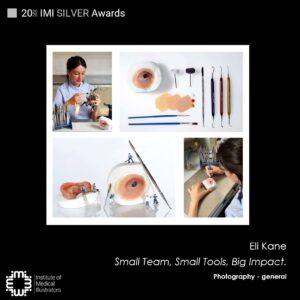
Award-winning entries combined good clinical storytelling with excellent technical execution, particularly in lighting, exposure and image quality. The judges were impressed by the range of clinical cases presented and the evident care taken to document patients and procedures. Many entries demonstrated strong clinical value, interesting subject matter, and effective use of photographic techniques to communicate medical information.
Strengths identified
- Effective use of lighting, composition and colour to create visually engaging images.
- Strong clinical storytelling through progression series, comparative images and creative viewpoints.
- High standards of image quality, focus and technical execution in the best entries.
- Good balance between clinical relevance and visual impact.
- Confident post-processing that enhanced images without distracting from the subject.
Opportunities for improvement
- Improve consistency in exposure, lighting and colour balance.
- Ensure critical areas of pathology remain sharp.
- Minimise distracting backgrounds, reflections and compositional elements.
- Export files at appropriate resolution and quality settings.
- Consider how each image communicates a clear educational or clinical message.
Overall, many entries demonstrated significant potential, and relatively small technical improvements, particularly relating to lighting, exposure, focus and image editing, could have substantially increased their impact. The category was highly competitive, and the quality and educational value of the submissions were widely recognised.


Video
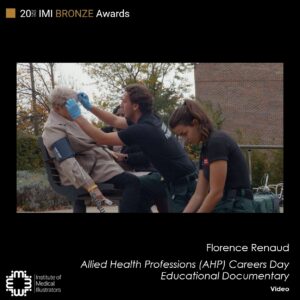
Successful entries demonstrated a clear understanding of audience, purpose and storytelling, supported by strong editing and production values. The judges recognised the considerable effort, creativity, and technical skill demonstrated across the category. Entries covered a wide range of purposes, from patient information and staff education to promotional campaigns, storytelling, and fundraising. Many submissions showed strong production values and a clear understanding of audience needs.
Strengths identified
- Clear educational objectives and strong audience focus.
- Effective storytelling supported by good narration, editing and pacing.
- Professional production values, including sound, graphics and animation.
- Successful presentation of complex healthcare topics in an accessible way.
- Strong collaboration between technical and clinical contributors.
Opportunities for improvement
- Review pacing to ensure viewers have sufficient time to absorb information.
- Improve audio consistency, narration clarity and accessibility features.
- Strengthen story structure and maintain focus on key messages.
- Refine editing choices to improve continuity and viewer engagement.
- Ensure visual elements support rather than compete with the content.
The strongest entries combined excellent technical production with a clear understanding of audience, purpose and storytelling. Many submissions demonstrated high levels of professional skill, but the most successful videos balanced strong visuals and sound with concise, engaging narratives that communicated their message clearly. In a highly competitive category, relatively small improvements to pacing, narrative clarity and audience focus often made the difference between a good entry and an award-winning one.


Graphics
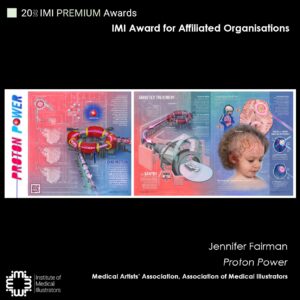
Projects rated highly when design decisions were clearly driven by the needs of the intended audience and communication objective. The judges were impressed by the breadth of work submitted, including patient information resources, anatomical illustrations, educational materials, 3D visualisation, animation, and design projects. Across the category, judges recognised a high level of creativity and technical skill, particularly where visual communication effectively supported the intended audience and purpose.
Strengths identified
- Excellent visual communication of complex information.
- Strong understanding of audience needs and communication objectives.
- Effective use of illustration, animation, typography and layout.
- High levels of creativity while maintaining accuracy and clarity.
- Well-designed patient-facing and educational resources.
Opportunities for improvement
- Clearly communicate the intended audience and purpose of the project.
- Refine typography, annotations and overall presentation.
- Strengthen accessibility and usability considerations.
- Provide sufficient context to demonstrate how the work is used in practice.
- Ensure supporting information enhances understanding without creating visual clutter.
Entries received the most praise when they combined excellent technical execution with a clear understanding of audience needs and communication objectives. Successful projects demonstrated not only artistic skill but also thoughtful consideration of how information could be presented most effectively. Across the category, particular value was placed on work that balanced accuracy, clarity, accessibility and visual appeal. In a highly competitive field, attention to typography, annotation, presentation quality and the communication of project aims often distinguished award-winning entries from those that narrowly missed recognition.


Ophthalmology
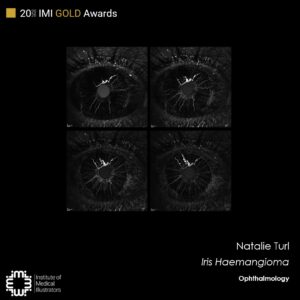
The highest-scoring images balanced technical excellence with clear clinical relevance and effective use of specialist imaging techniques. The judges were pleased to see a wide range of ophthalmic imaging techniques represented, including anterior segment photography, fundus photography, fluorescein angiography, slit-lamp imaging, cross-lighting techniques, and external eye photography. The category showcased both challenging pathology and a high standard of clinical documentation, with many entries demonstrating strong technical competence and educational value.
Strengths identified
- Excellent technical image capture with strong focus and detail.
- Effective use of specialist ophthalmic imaging techniques.
- High clinical relevance and educational value.
- Creative approaches to composition that enhanced understanding of pathology.
- Strong control of lighting, exposure and colour in the highest-rated images.
Opportunities for improvement
- Reduce issues with overexposure, underexposure and distracting reflections.
- Improve sharpness, resolution and export quality.
- Pay closer attention to composition, depth of field and positioning.
- Remove avoidable artefacts and distractions.
- Ensure technical choices support clear clinical interpretation.
Judges particularly valued entries which combined excellent technical execution with clear clinical purpose. Images that successfully balanced focus, exposure, lighting, composition and anatomical clarity consistently performed well. Across the category, particular value was placed on photographs that not only documented pathology accurately but also used ophthalmic imaging techniques to enhance understanding of the condition.


Key Themes from Across the Awards
While each category presented its own unique challenges, several common themes emerged consistently throughout the judging process. Across Photography, Video, Graphics and Ophthalmology, judges consistently rewarded work that combined excellent technical execution with a clear understanding of audience, purpose and communication objectives.
Judges repeatedly recognised work that demonstrated:
- A clear understanding of the intended audience and communication goals.
- High technical standards, including image quality, lighting, editing and presentation.
- Strong visual storytelling and the ability to present complex information clearly and effectively.
- Careful attention to detail, particularly in quality control, accessibility and final output.
- Creative approaches that enhanced understanding while maintaining clinical and educational value.
The feedback also highlighted that relatively small refinements can often make a significant difference. Attention to exposure, focus, pacing, typography, layout, accessibility and file preparation frequently distinguished award-winning submissions from those that narrowly missed recognition. Ultimately, the awards recognised work that not only demonstrated technical expertise, but also communicated information effectively, engaged its audience and supported understanding.


The Institute of Medical Illustrators extends its thanks to all entrants for sharing their work, and to the judging panels for the time, expertise and thoughtful feedback they contributed. The consistently high standard of submissions across all categories continues to demonstrate the skill, innovation and professionalism of the medical illustration community, and we look forward to seeing these strengths reflected in future Awards.